

When designing with wood slat panels, especially those incorporating MDF (Medium Density Fiberboard), one common concern is whether the material is resistant to warping or deformation over time. Whether you are using Real Wood Slat Panels or 3 Sides Veneer Wood Slat Panels, understanding the performance of MDF in terms of stability is crucial to ensure the longevity and durability of the panels, especially in environments with fluctuating humidity or temperature.
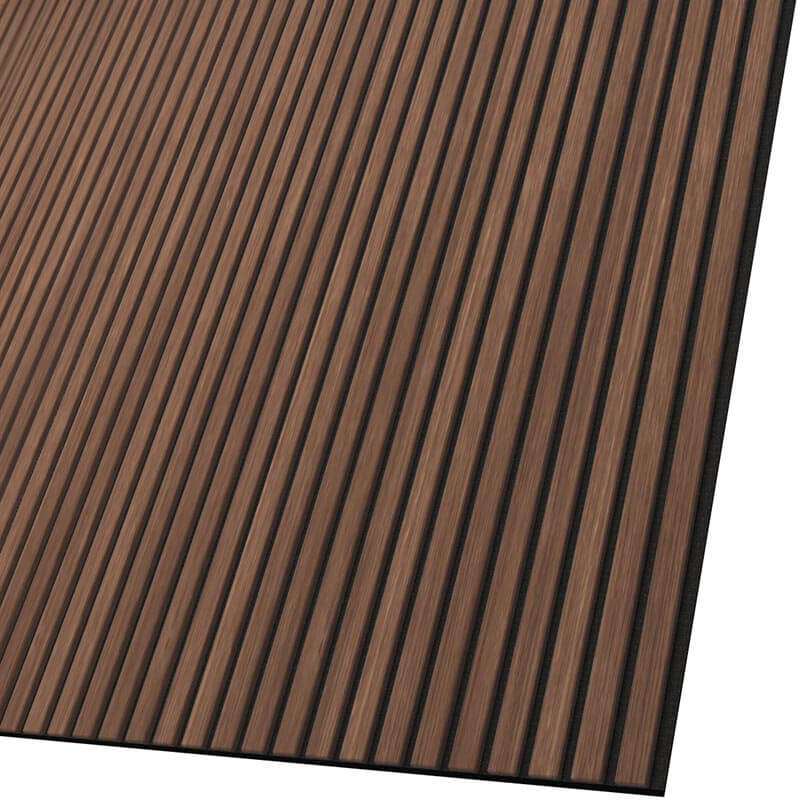
What is MDF and Its Properties?
MDF (Medium Density Fiberboard) is an engineered wood product made by breaking down wood fibers into small particles, which are then combined with resin and compressed under high pressure and heat. This process results in a smooth, dense, and sturdy material that is widely used in the production of wood slat panels.
While MDF is known for its smooth surface, strength, and ability to hold finishes well, it is important to understand how it performs in different environmental conditions, particularly with regard to warping or deformation.
Does MDF Resist Warping?
MDF is more stable than solid wood in terms of expansion and contraction, which makes it less prone to warping when subjected to changes in temperature and humidity. However, MDF is not immune to moisture-related issues. In high-humidity environments, MDF can absorb moisture, which may lead to swelling, bowing, or warping over time.
For wood slat panels that are used in areas with higher moisture levels—such as kitchens, bathrooms, or basements—it's essential to take steps to ensure that the MDF core remains stable. In these environments, it is recommended to use moisture-resistant MDF (MR MDF), a specially treated version of the material that offers improved resistance to humidity and moisture-related deformation.
How Does MDF Perform in Real Wood Slat Panels?
In Real Wood Slat Panels, the MDF core serves as a stable base for the natural wood veneer. Since MDF is less likely to shrink or expand like natural wood, it helps maintain the overall integrity of the panel. However, if the MDF is exposed to moisture, the wood veneer could also be at risk of warping, which might compromise the aesthetic quality of the Real Wood Slat Panels.
To prevent warping or deformation, manufacturers often apply a protective finish to both the MDF core and the wood veneer. This finish helps to shield the materials from moisture and environmental factors that could otherwise lead to deformation.
What About 3 Sides Veneer Wood Slat Panels?
For 3 Sides Veneer Wood Slat Panels, where the MDF core is wrapped in veneer on three sides, the MDF still provides the same strength and stability. The veneer acts as a protective layer, offering additional resistance to moisture and physical wear. However, the core still requires protection against excessive humidity to avoid potential warping or swelling.
Just like with Real Wood Slat Panels, applying moisture-resistant finishes to both the veneer and MDF core can significantly reduce the risk of deformation in 3 Sides Veneer Wood Slat Panels.
Conclusion
In conclusion, MDF used in wood slat panels is generally resistant to warping compared to natural wood, but it can still be susceptible to moisture-related deformation if not properly treated or maintained. To ensure long-lasting stability in Real Wood Slat Panels and 3 Sides Veneer Wood Slat Panels, it’s important to choose moisture-resistant MDF and apply protective finishes. By taking these precautions, designers and manufacturers can ensure that wood slat panels remain structurally sound and visually appealing for years to come.