

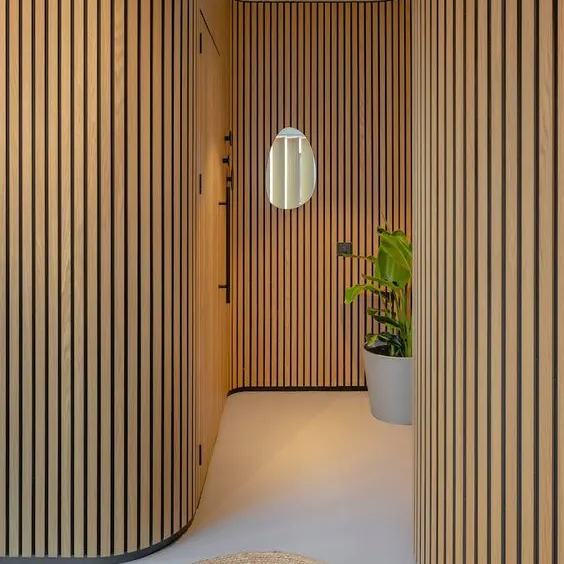
As a manufacturer of wood slat panels, one of the key concerns for customers is how to ensure the durability and longevity of the MDF (Medium-Density Fiberboard) core used in Real wood slat panels. MDF is a versatile material, but it can be susceptible to moisture damage if not properly treated. In this article, we’ll explain how the MDF core in wood slat panels is treated for moisture resistance and how this treatment helps maintain the panels' performance and appearance over time.
Moisture Resistance of MDF in Wood Slat Panels
Moisture-Resistant MDF: The MDF core used in our Real wood slat panels is specifically designed to resist moisture absorption, which is one of the most common issues with traditional MDF. To ensure enhanced moisture resistance, MDF boards are manufactured using special resins and bonding agents that improve their ability to withstand humidity. The MDF core is treated during production to reduce the potential for water absorption, which helps prevent warping, swelling, and other forms of moisture-related damage. This makes the panels suitable for use in environments where humidity levels may vary, such as kitchens, bathrooms, and commercial spaces.
Sealed Edges: In addition to the inherent moisture-resistant properties of the MDF itself, the edges of the Real wood slat panels are often sealed to further protect against moisture ingress. This process involves applying a protective layer to the exposed edges of the panels, preventing water from penetrating the material. This is especially important in areas where the MDF core may be exposed to potential water sources, such as around window frames, door frames, or in areas where there may be high moisture levels. The sealed edges provide an added layer of defense against moisture, helping to maintain the panel’s integrity over time.
Wood Veneer Surface: The wood veneer used on the surface of wood slat panels also plays a crucial role in protecting the MDF core from moisture. The veneer acts as a protective barrier that limits direct contact with water, preventing moisture from reaching the MDF core. In addition, the wood veneer is typically treated with a finish that offers further protection against moisture and environmental factors. This combination of moisture-resistant MDF and the protective wood veneer surface ensures that the panels maintain their appearance and functionality, even in environments with higher humidity.
Appropriate Installation: To maximize the moisture resistance of the wood slat panels, proper installation is essential. Panels should be installed in well-ventilated spaces to avoid excessive moisture buildup, which can still affect even moisture-resistant materials over time. In bathrooms, kitchens, or other humid areas, it is important to ensure that the installation area has adequate airflow to prevent moisture accumulation that could impact the performance of the panels.
Conclusion
The MDF core in Real wood slat panels is treated with moisture-resistant resins and bonding agents to ensure its durability and prevent damage from humidity. Additional protective measures, such as sealing the edges and using a wood veneer surface, further enhance the panels' ability to withstand moisture. When combined with proper installation in well-ventilated spaces, these treatments ensure that wood slat panels maintain their aesthetic appeal and functional integrity over time, even in challenging environments. This makes them a reliable and long-lasting choice for both residential and commercial applications.