

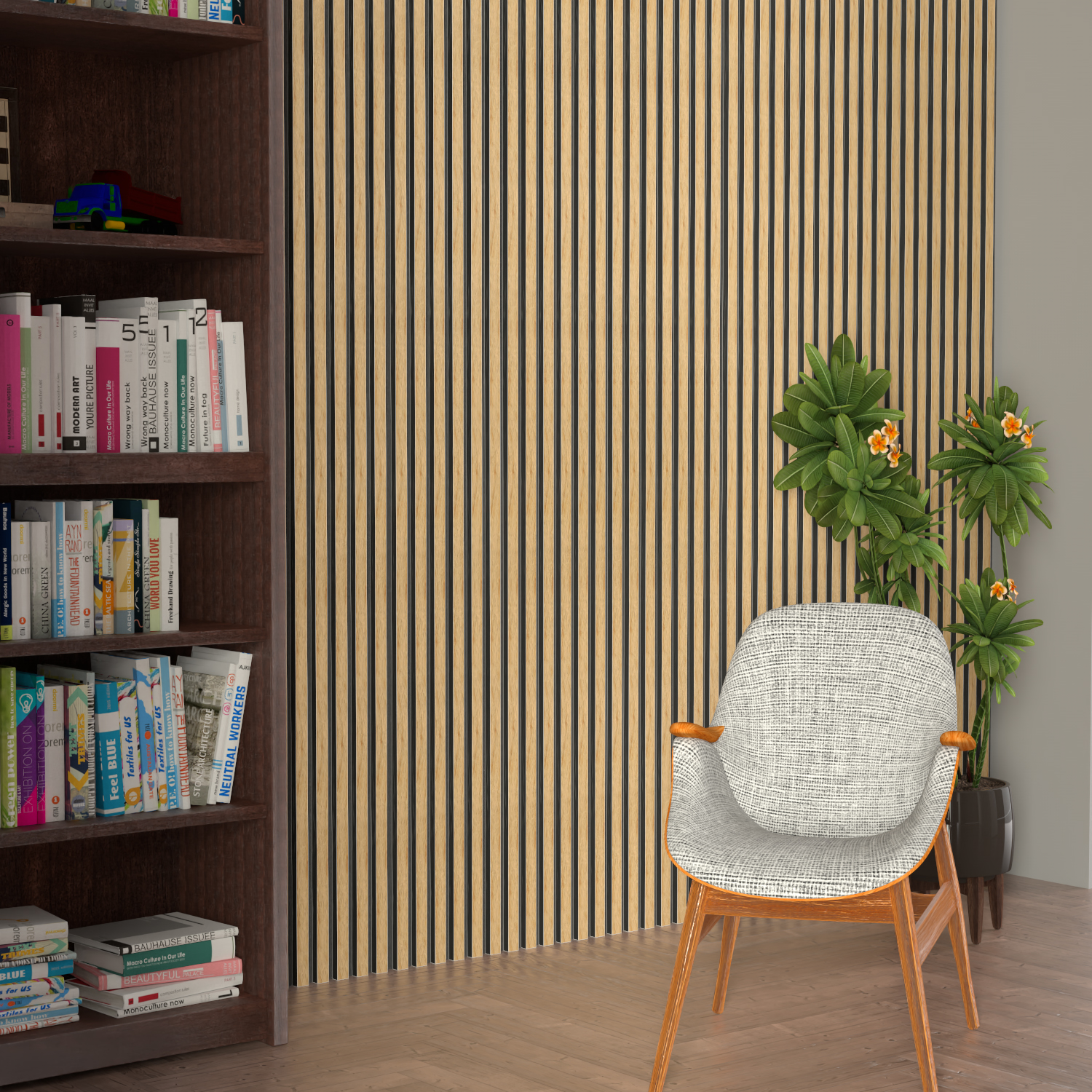
As a manufacturer of wood slat panels, one of the most common questions we receive concerns the installation process, particularly whether gaps or seams should be left between the panels during installation. The answer to this question depends on several factors, including the design preferences, the type of installation, and the performance requirements of the space. In this article, we will discuss why leaving gaps between Real wood slat panels is generally necessary and how to handle the spacing to achieve the best results.
Why Leave Gaps Between Wood Slat Panels?
Accommodating Expansion and Contraction: One of the main reasons to leave small gaps between wood slat panels during installation is to account for the natural expansion and contraction of the wood over time. Wood, including the wood veneer used in Real wood slat panels, is a natural material that reacts to changes in temperature and humidity. When exposed to high humidity or moisture, wood can expand, and in dry conditions, it may shrink. By leaving small gaps, typically between 1/16 to 1/8 inch, between the panels, you allow the wood slats to move naturally without causing warping, buckling, or stressing the panels. This is especially important in areas with fluctuating temperatures or humidity levels, such as living rooms, kitchens, or offices.
Preventing Surface Damage: Leaving a slight gap between wood slat panels can help prevent surface damage caused by direct contact between the edges of the panels. Over time, the wood may shift or settle, and if the panels are installed too tightly, friction or pressure between the slats can cause damage to the veneer. A gap allows the panels to "breathe" and settle naturally, ensuring that the surface remains smooth and undamaged.
Aesthetic Considerations: The decision to leave gaps between Real wood slat panels is not only practical but also aesthetic. Many designs intentionally incorporate small gaps to create a clean, modern look. The spacing can help emphasize the lines of the wood slats, giving the wall or ceiling a more dynamic, textured appearance. The gap itself can be part of the design concept, adding visual interest and allowing light and shadow to play across the surface.
How Much Gap Should Be Left?
The amount of gap to leave between the panels depends on the size of the slats, the specific material used, and the environmental conditions. In general, a 1/16-inch to 1/8-inch gap is recommended for most installations. However, if the installation is in a high-humidity environment, such as a bathroom or kitchen, a slightly larger gap may be necessary to allow for greater movement.
It’s also important to note that the gaps between the panels should be consistent. This can be easily achieved by using spacers during installation to maintain even spacing. The 3 sides veneer wood slat panels are designed to be installed with precision, so even spacing ensures a polished, professional look.

Conclusion
Incorporating small gaps between wood slat panels during installation is essential for ensuring the long-term durability and performance of the panels. Not only do these gaps accommodate the natural expansion and contraction of wood, but they also prevent surface damage and contribute to the overall aesthetic of the design. By leaving the recommended gaps and using spacers to maintain consistency, you can achieve a seamless, beautiful result that enhances the acoustics and aesthetics of any space.