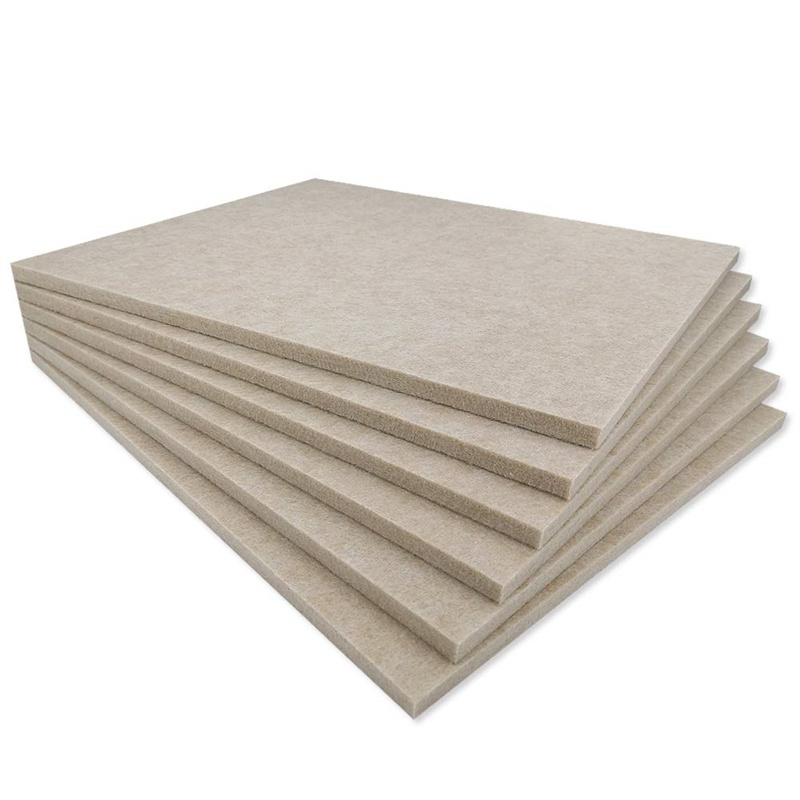
polyester acoustic panels vs foam: stronger sound absorption, ideal solution for spatial acoustics

In modern interior design, the choice of acoustic material is crucial to optimize the acoustics of a space. Especially in offices, conference rooms, concert halls and other places where noise needs to be effectively minimized, the performance of acoustic materials has a direct impact on the comfort and efficiency of the space. Foam was once the preferred choice for many acoustic absorption projects due to its lightweight and low-cost characteristics. However, as a high-performance acoustic material, 3D Acoustic panel is significantly better than traditional foam in terms of sound absorption and has become the first choice for more and more designers and clients.
Firstly, PET Acoustic panel is made from PET (polyester fiber), a material whose density and structure have been carefully designed to absorb and dissipate sound waves more effectively. In contrast, traditional foams such as polyurethane foam, which typically have a lower density, are not as efficient as 3D Acoustic panels, although they can absorb sound to a certain extent.The acoustic performance of PET Acoustic panels not only reduces noise, but also eliminates echoes and reflections, providing a clearer, more immersive sound experience. Therefore, in environments where sound transmission needs to be precisely controlled, PET Acoustic panels are definitely the better choice.
Secondly, the structural design of polyester acoustic panels provides sound absorption over a wider frequency range. While foams typically have limited sound absorption at low and mid frequencies, 3D Acoustic panels, through their unique porous structure and optimized design, excel at absorbing sound between high and low frequencies, improving the acoustic environment of a space in a more comprehensive way. This makes PET Acoustic panel an ideal choice for spaces such as music studios, recording studios, and theaters, as it not only reduces ambient noise, but also effectively regulates acoustic reflections in the space, improving the clarity and quality of sound.
In addition, the durability and stability of polyester acoustic panels far exceeds that of traditional foam materials. Foam materials are susceptible to moisture, aging, and may compress and deform over time, resulting in reduced sound absorption. On the other hand, the PET material of 3D Acoustic panels is highly resistant to humidity, aging and durability, and can maintain its excellent sound absorption effect for a long period of time, even under high humidity or changing environmental conditions.
In summary, PET Acoustic panel has a clear advantage over foam in terms of sound absorption. Its excellent acoustic properties, wide frequency response and increased durability make 3D Acoustic panel the ideal material where efficient and consistent sound absorption is required. Whether it's a commercial space, a residence or a professional sound environment, PET Acoustic panel provides a better acoustic experience, helping to create a more comfortable and quieter space for the user.