
Is it necessary to leave a gap when installing wood slat panel? Ensure effective and functional installation
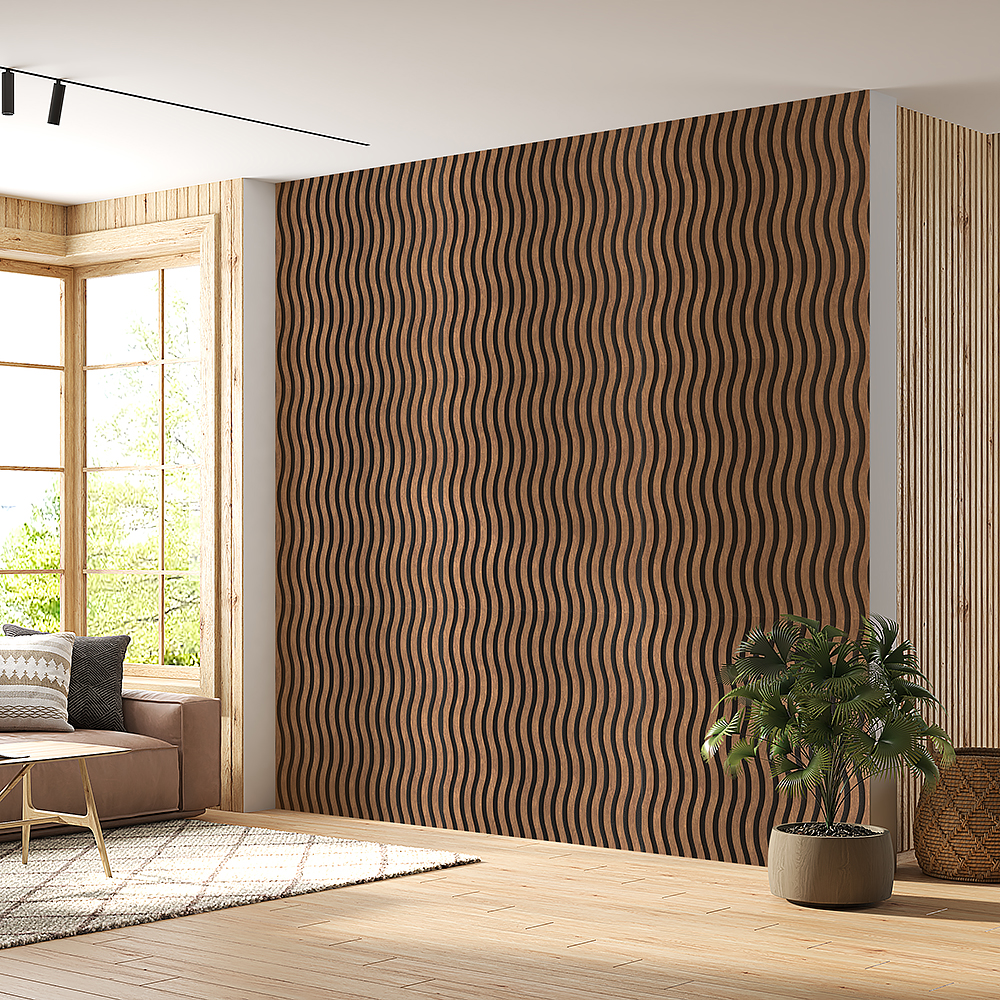
3 sides veneer wood slat panel is a high-performance panel that combines acoustics and decorative features and is widely used in various interior spaces. When installing Real wood slat panels, many users are concerned about one question: Is it necessary to leave gaps between the panels? The answer is yes. It is important to leave appropriate gaps to ensure an aesthetically pleasing installation, functionality, and long-term performance of the panels.
Why do I need to leave a gap?
1. Consideration of thermal expansion and contraction
The main materials of wood slat panels include PET acoustic layer, MDF boards and veneer surfaces, which are subject to a certain degree of thermal expansion and contraction in response to changes in temperature and humidity. If panels are installed without sufficient clearance, Real wood slat panel panels may expand or deform as ambient temperature and humidity change, affecting aesthetics and functionality. By reserving proper clearance during installation, the panel can be allowed to freely undergo minor expansion or contraction, thus avoiding deformation or damage.
2. Optimization of sound reflection
Proper gap design during installation helps to optimize the acoustics of the panel. The gap prevents the panels from coming into full contact with the wall, thus reducing the impact of directly reflected sound waves on the acoustic effect and avoiding sound distortion caused by too tight a contact. By maintaining a certain distance between the panels, the sound can have a proper propagation space between the panels and the wall, which in turn enhances the sound absorption effect of the panels and the acoustic performance of the space.
3. Maintaining the stability of the installation
Gap can also help the panel in the installation process to maintain stability. An overly tight installation may cause the panel to develop stresses when the environment changes, which may lead to loosening of the mounting points or deformation of the panel surface. Proper clearance can reduce these stresses, extending the life of the wood slat panel and maintaining its long-term stability.
Specific size of the gap
In general, when installing Real wood slat panels, it is recommended to leave a gap of approximately 2-5 mm between the edge of the panel and the wall or ceiling. This size of gap provides enough space for the panel to cope with temperature and humidity variations, while ensuring that the sound effect is optimized. The exact gap size can also be fine-tuned depending on the actual needs of the project and the environmental conditions of the space. If the installation is in an area with high humidity, the gap may need to be increased appropriately to prevent the panel from expanding due to moisture changes.
How is pre-gap achieved?
When installing 3 sides veneer wood slat panels, installers can use specialized installation tools or spacers to ensure consistent gaps are maintained between panels. By adjusting the spacing of the panels during installation, it is possible to ensure that the gaps between each panel are even and appropriate, avoiding uneven gaps that may affect the overall aesthetics and effect.
Summarizing
When installing wood slat panels, leaving appropriate gaps not only prevents the panels from being affected by changes in temperature and humidity, but also optimizes the acoustic effect and ensures installation stability. By setting the gap appropriately, the service life of the panel can be improved, problems caused by thermal expansion and contraction can be minimized, and sound propagation in the space can be ensured to be more balanced and clearer. Therefore, when installing Real wood slat panels, it is vital to ensure that the necessary clearances are provided, which is essential for optimum functionality and aesthetics.